
Local culture and heritage
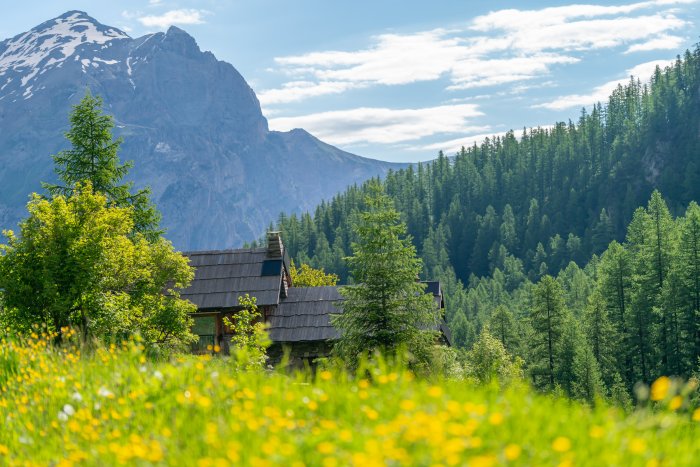
In Puy Saint Vincent, the mountains tell more than just a landscape: they also tell a story, shaped by generations of inhabitants. With its rural traditions, hamlet architecture and preserved natural heritage, the area bears witness to a strong bond between man and his environment. Here, every path, every chapel and every valley bears the memory of an authentic mountain way of life.
History of Puy Saint Vincent
Formerly known as Puy Saint-Romain, the village owes its current name to Vincent Ferrier, in whose honor a chapel was built in the late 14th century.
From the Middle Ages onwards, life was organized around mountain agriculture: terraced farming, livestock breeding and water management thanks to irrigation canals. Today's landscape still bears the traces of this, with its meadows, hamlets and ancient agricultural structures.
Long before this, the land was already occupied: agropastoral remains and hunting sites dating back over 4,000 years have been found in the Écrins, notably around Puy Saint Vincent and Freissinières.
Cultural heritage
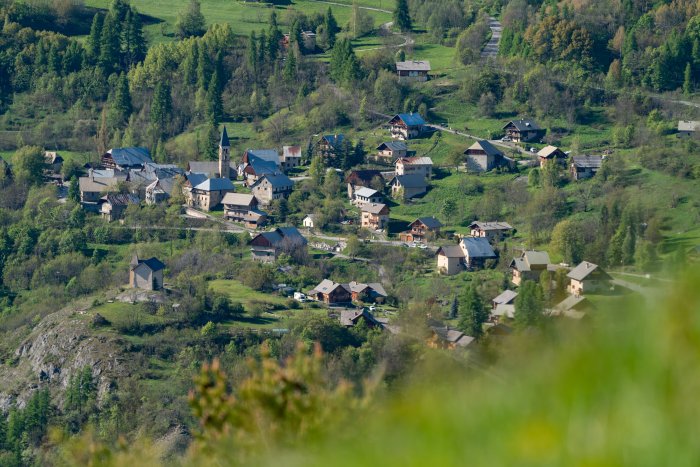
Puy Saint Vincent's cultural heritage is closely linked to mountain life and local traditions. The hamlets still retain their typical layout, with a mix of dwellings, places of worship and farm buildings.
Chapels and churches play a central role in local life. Some, decorated with frescoes or sundials, bear witness to artistic know-how and popular beliefs.
The area is also part of a wider Alpine culture, marked by mountaineering, mountain trades and pastoral traditions. In the neighboring Vallouise valley, this culture is still very much alive, notably through the high-mountain guides and practices linked to the exploration of the Écrins.
Architectural heritage
The architecture of Puy Saint Vincent is intimately linked to mountain life. Traditional stone and wood buildings were designed to withstand climatic conditions while meeting agricultural and pastoral needs. But beyond this typical habitat, it is above all the chapels and religious buildings that tell the story of the territory, its beliefs and its inhabitants.
Saint-Romain chapel
Perched on a promontory overlooking the valley, the Saint-Romain chapel is one of the oldest witnesses to Puy Saint Vincent's past. Located near the remains of an ancient abandoned village, it marks the historic site of the first human settlements.
Simple and sober in its architecture, today it offers a remarkable view of the Vallouise valley. Restored and refurbished, it now hosts occasional exhibitions, blending heritage and contemporary culture.
Sainte-Marie-Madeleine church
Located in one of the commune's hamlets, this church is a central element of the local heritage. It is particularly noteworthy for its ancient sundials, typical of the Southern Alps, which bear witness to the relationship between time and light in rural societies.
Inside, you'll discover a sober decor steeped in history, with restored elements that highlight the valley's religious heritage. Today, it remains an important gathering place for local residents.
Sainte-Marthe Church
Built in the 19th century, Sainte-Marthe church reflects a more recent architectural style, but is just as emblematic of local life. It has recently been restored to preserve its character and decorative features.
In particular, it houses antique liturgical furnishings and testimonials to the religious life of the commune. Its position and role make it an important landmark in the village landscape.
Saint-Vincent chapel
A secret gem. Situated at the start of the Narreyroux road, this small mountain chapel is entirely decorated with magnificent murals dating from the mid-15th century and in an excellent state of preservation. Linked to the visit in 1400 of a preacher, Saint Vincent Ferrier, it is dedicated to Saint Vincent de Saragosse, his patron saint (and that of winegrowers), and features an anthology of popular saints.
Opened every Thursday during the summer (and on Heritage Days) from 3 to 6 pm by volunteers from the Travers'Arts association, it has also been the subject of a brochure, on sale for €5 in Vallouise bookshops and valley tourist offices.
Hamlet chapels (Narreyroux, Les Prés, Les Alberts...)
Scattered throughout the various hamlets of Puy Saint Vincent, these little chapels tell the story of the daily lives of the inhabitants in days gone by. Often built by local communities, they served as local places of worship, sparing residents long journeys, especially in winter.
The Narreyroux chapel, set in an unspoilt valley, is particularly emblematic. Surrounded by alpine chalets, it blends perfectly into the landscape and bears witness to the importance of pastoral life.
Other, more discreet chapels dot the roads and hamlets. They are often associated with local traditions, festivals or specific religious practices. Their architecture is simple, but their heritage value is strong, as they embody the region's identity and collective memory.
An everyday heritage
In addition to its religious buildings, Puy Saint Vincent has preserved many elements of its rural heritage:
- old, communally-used bread ovens
- irrigation canals (the "bisses") that structured crops
- traditionalbarns and stables
- sundials visible on facades
A wealth of evidence to help us understand how people lived, worked and adapted to the mountains.
A discreet but precious heritage that can be discovered as you stroll through the hamlets, giving Puy Saint Vincent's identity its full depth.